
Transnasal approach for pituitary tumor
The procedure
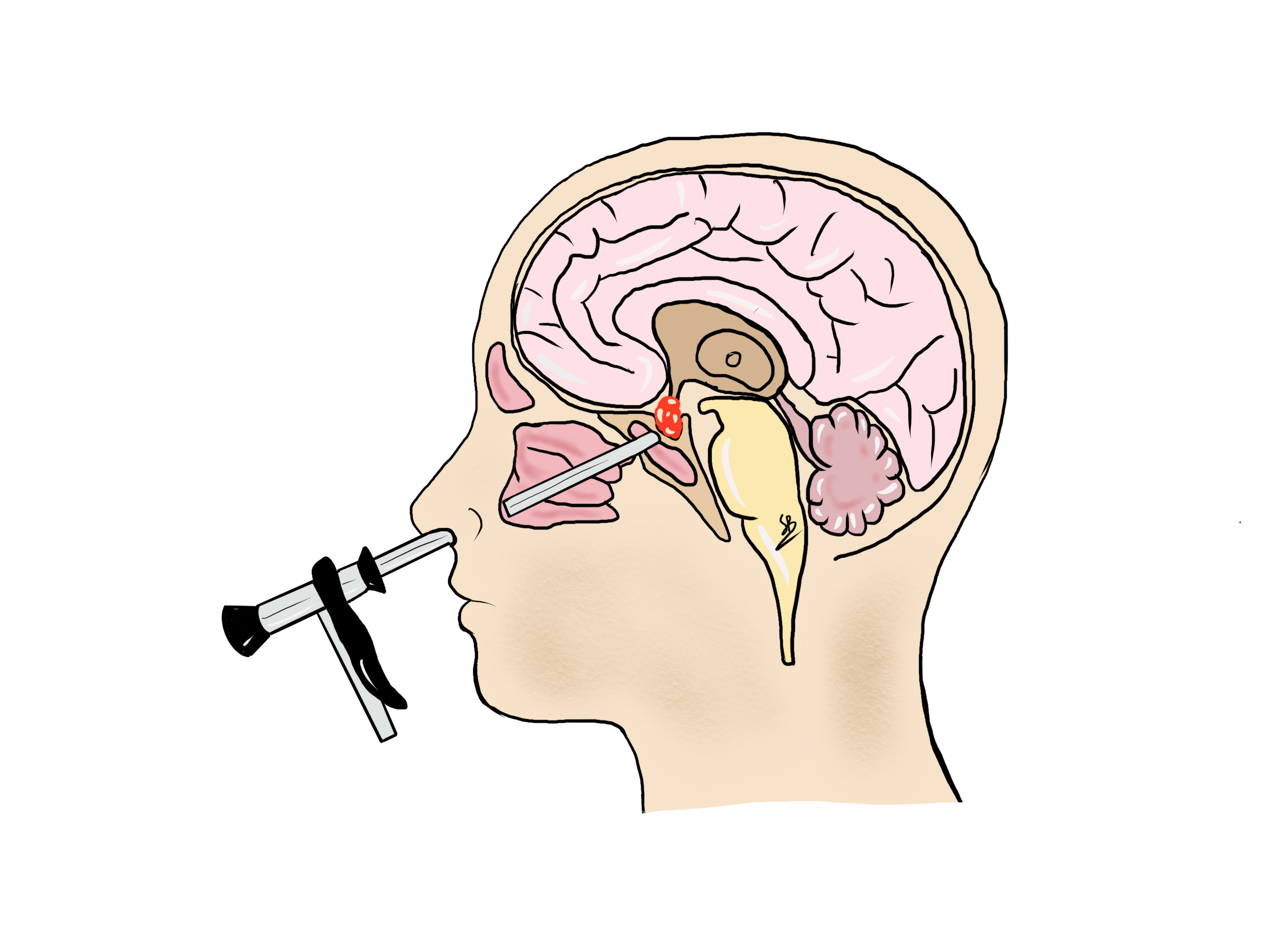
The “through-the-nose” approach has progressively replaced craniotomy for access to the sella turcica, which contains the pituitary gland, and has become over the past 20–30 years the gold standard for pituitary surgery. This approach can be performed using endoscopy or microsurgery, with fairly similar results.
This is a procedure performed under general anesthesia and requires antibiotic treatment during the operation and for the first three postoperative days.
The incision is made on the nasal mucosa of the septum of one of the two nostrils. After removal of part of the bony nasal septum or enlargement of the openings of the sphenoid sinus, the lower part of the sella turcica is drilled to access the pituitary gland.
The dura mater is then incised to remove the pituitary tumor using micro-curettes. During tumor removal, several biopsies of the tumor tissue are performed. It is very important to remove the tumor tissue while identifying and preserving the normal pituitary gland.
After the most complete possible removal of the tumor, the opening of the dura mater is closed using a biological glue patch. The nasal mucosa is sutured, and hemostatic nasal packing is placed in both nostrils.
After surgery
The patient is hospitalized for 3 to 5 days after surgery, including the first 24 hours in the intensive care unit. Hormonal replacement therapy for the pituitary gland is administered for 3 days, and hormonal monitoring is carried out during the first 3 days. The nasal packs are removed the day after surgery. Walking is allowed the day after surgery.
Normal postoperative course
- Mild pain after surgery
- Significant discomfort due to nasal packing during the first 24–48 hours postoperatively
- Nasal dryness for 2–3 weeks, requiring daily nasal rinses
- Gradual resumption of activities after the first week
Possible specific complications (<5%)
- Cerebrospinal fluid leak
- Infection and meningitis
- Postoperative hormonal imbalance
- Diabetes insipidus