
Ultrasound-guided spinal injections
Spinal injections for spinal disorders represent an important tool in the therapeutic arsenal. For most degenerative spinal conditions, injections are part of palliative pain management, but for certain pathologies they can lead to complete long-term resolution of inflammation. Most spinal injections are performed under fluoroscopy or CT guidance, both of which use X-rays. In order to avoid exposing patients to radiation during these procedures, we perform spinal injections under ultrasound guidance.
What are the different types of spinal injections?
It is important that your physician identifies the pathology causing your pain. Once an accurate diagnosis has been established, if an injection is indicated, it must be precisely and exclusively targeted to the underlying pathology. Depending on the condition, different types of injections may be proposed:

Epidural injection in cases of lumbar spinal canal stenosis
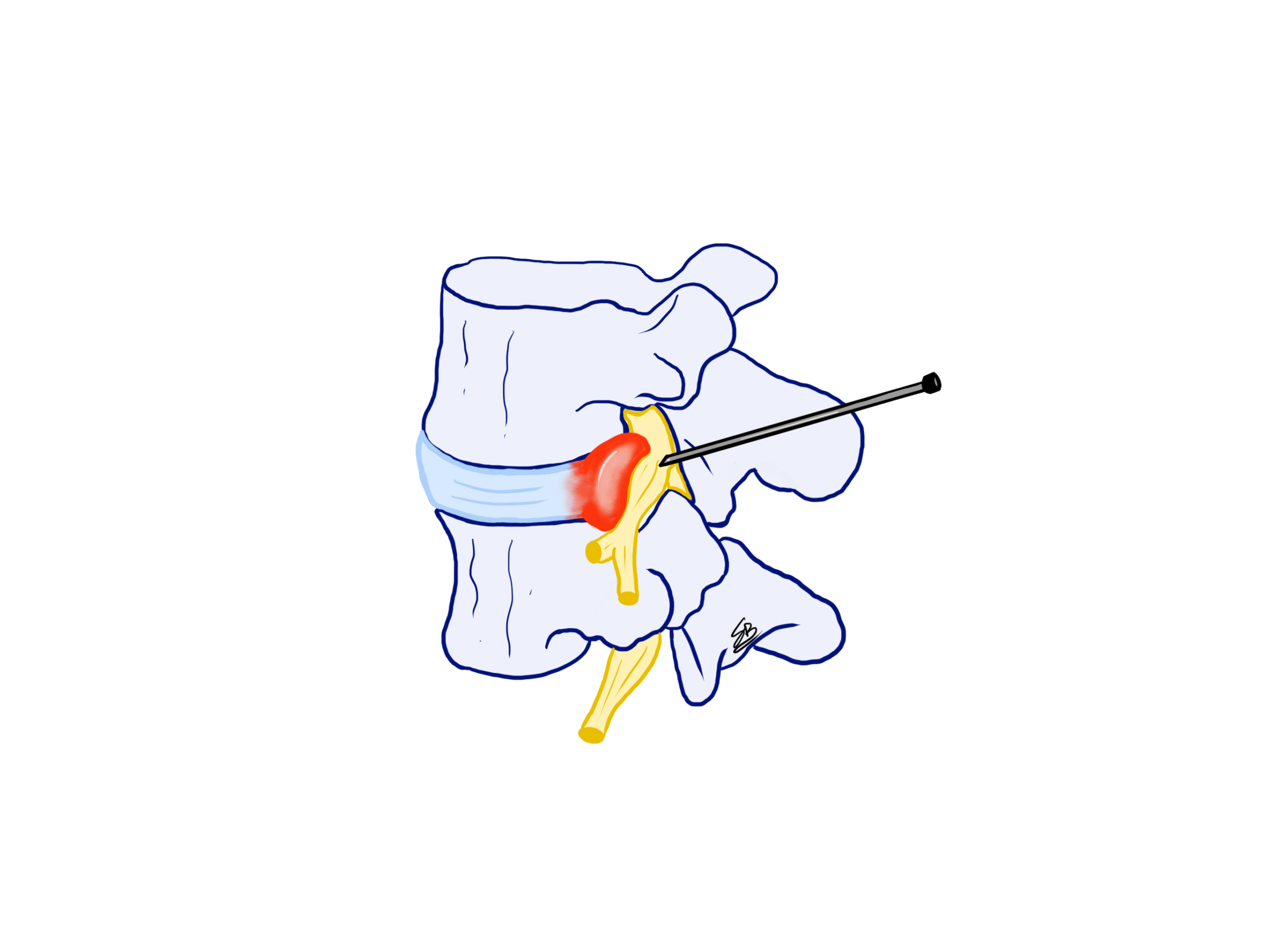
Periradicular injection in cases of nerve pathology (radicular pain)

Sacroiliac joint injection (sacroiliitis)
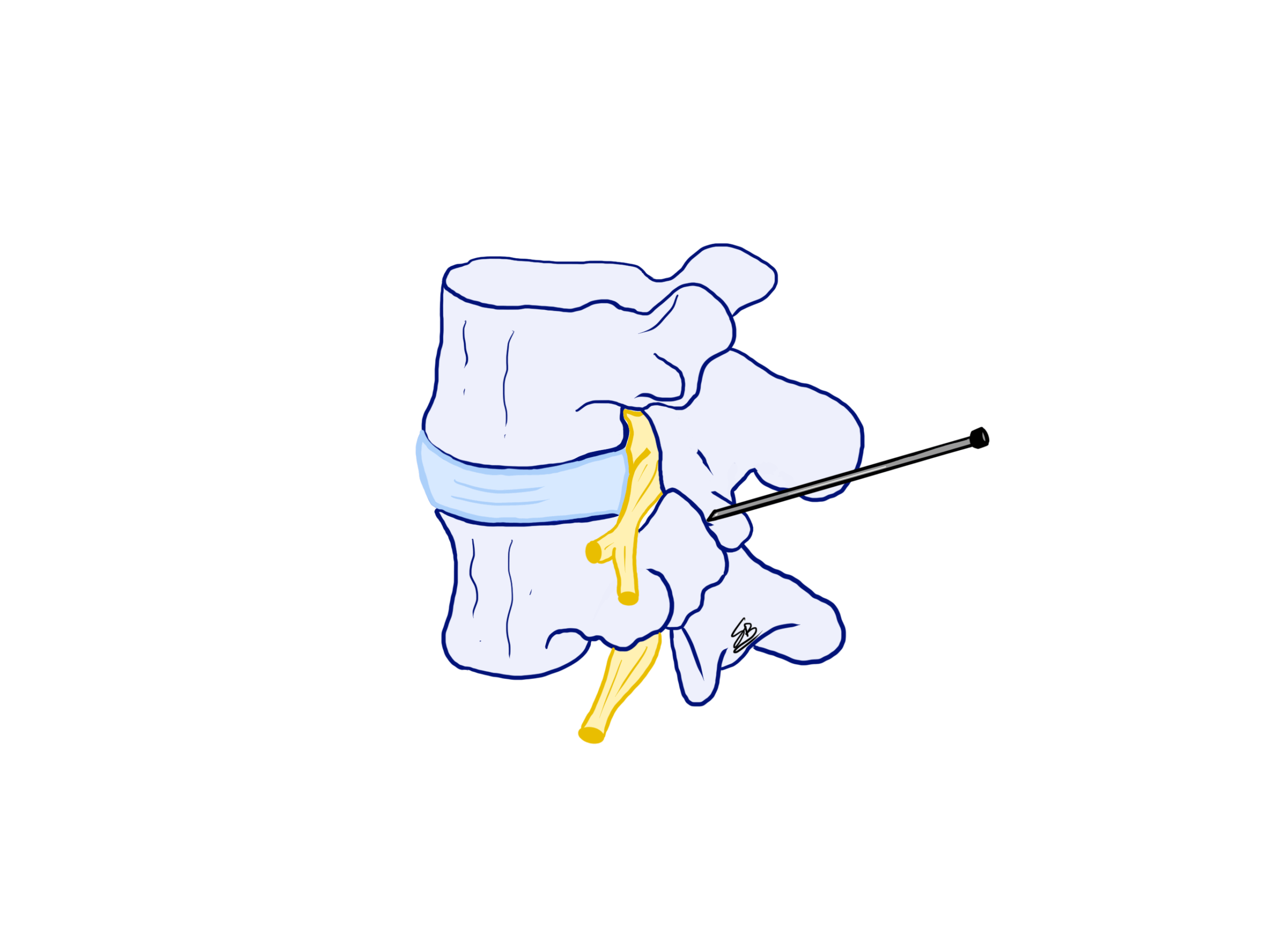
Facet joint injection in cases of facet joint arthrosis (axial pain)
How does ultrasound work?
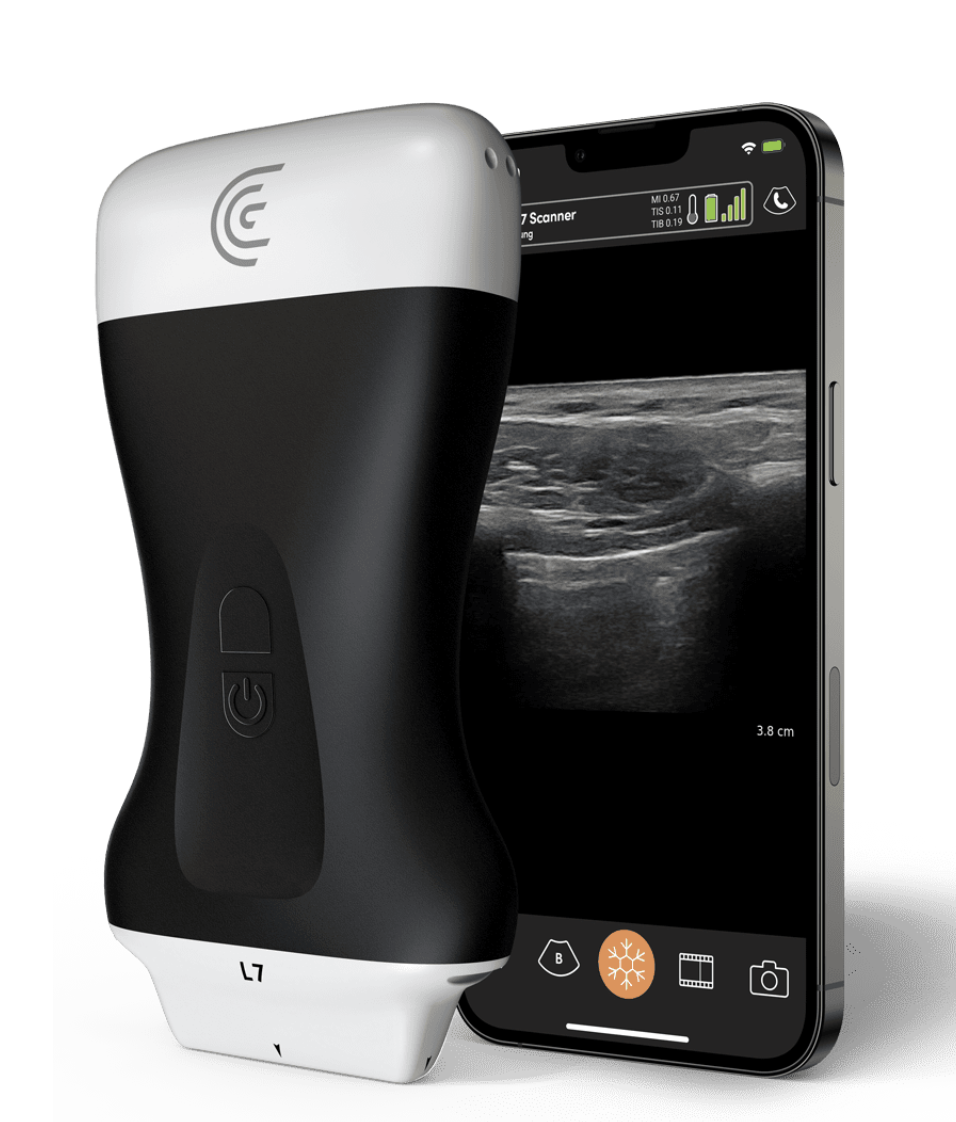
The ultrasound system we use consists of a portable probe connected via Bluetooth to a standard tablet. The procedure is very fast and can be performed in a consultation room. It begins with ultrasound imaging of the lumbar spine region. The physician then applies the probe to the patient’s skin for several minutes. Once the anatomical structures have been identified and the injection site located, the physician inserts a fine needle to inject the medication.
What are the advantages of ultrasound-guided injections?
- No exposure to X-ray radiation (unlike fluoroscopy or CT)
- Visualization of the needle during the entire procedure
- Short procedure time (approximately 5 minutes compared with 30 minutes under CT)
- Can be performed during a standard consultation
- Can be performed during consultations in Manno, Chiasso, Locarno, and Bellinzona
What are the disadvantages of ultrasound-guided injections?
- Longer and more demanding physician training
- Requires more precise anatomical knowledge
Why is it important that the injection is performed by your treating neurosurgeon?
During the consultation, the neurosurgeon gathers information from your clinical history, analyzes the type of pain you are experiencing, looks for clinical signs on examination, and correlates these findings with the pathologies visible on imaging. It is not uncommon to identify more than one pathology on spinal MRI. The fundamental work consists of analyzing all available information to determine which pathology is responsible for the pain. If the physician who performs the injection is the same one who analyzed the problem, the probability of treatment success is significantly higher. Conversely, a treatment performed by a physician unfamiliar with your history and relying solely on MRI images greatly reduces the chance of success.
Are there contraindications?
Yes. These are the contraindications common to all spinal injections. They are not related to the use of ultrasound as a guidance method.
The main contraindications include:
- Anticoagulant or antiplatelet therapy (requiring temporary discontinuation several days before the procedure)
- Presence of a motor neurological deficit
If you require an evaluation for a spinal injection and wish to have it performed under ultrasound guidance with us, you may contact us via the online form or by email : segretariato@neurochirurgia-robert.ch