Chronic back pain
Back pain affects about 60% of the population at least once in their lifetime. In a smaller percentage, this problem can become chronic.
In most cases, chronic back pain is due to a degenerative condition, consisting of osteoarthritis of the lumbar spine joints and degeneration of the intervertebral discs.
The first episode of low back pain is usually treated with analgesic and anti-inflammatory therapy. If pain persists and/or alarm signs are present (trauma, positive oncological history, osteoporosis), it is advisable to perform further radiological examinations.
Lumbar MRI is the most comprehensive test for an initial evaluation of persistent low back pain. Depending on the type of pathology, it may be useful to complete it with a CT scan or specific X‑rays.
If the MRI rules out specific conditions (fractures, tumors, etc.) and shows only osteoarthritis without nerve compression, treatment is in most cases conservative.
The first approach consists of physiotherapy aimed at relaxing the paravertebral muscles and reducing inflammation of the lumbar joints.
In some cases, however, physiotherapy is not sufficient to control the pain. In these situations, targeted infiltrations into the lumbar joints can be added to physiotherapy treatment.
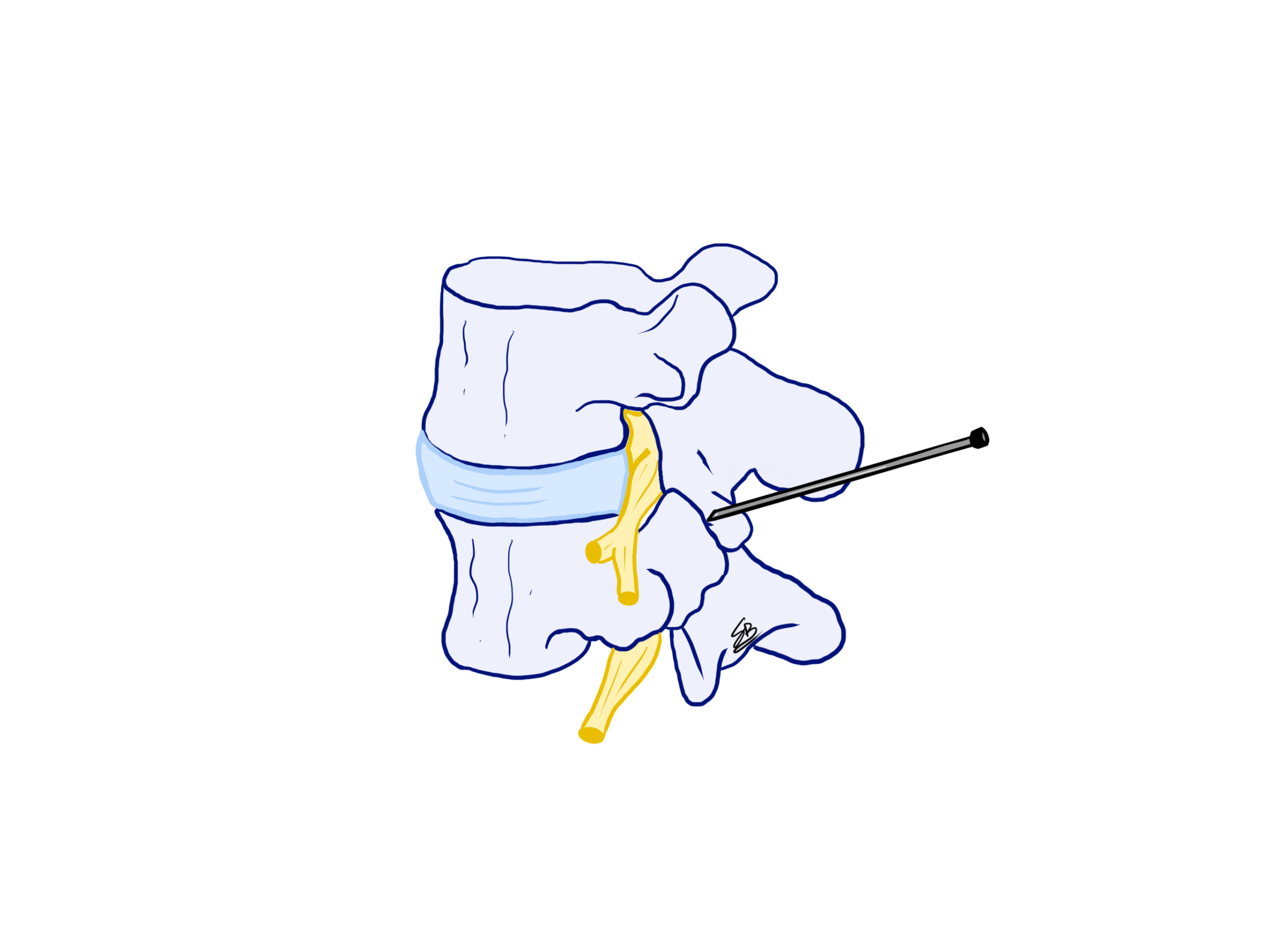
Facet joint infiltrations involve injecting a local anesthetic and cortisone into the lumbar joints, with the aim of reducing inflammation and achieving more effective pain control.
Unfortunately, infiltrations do not cure osteoarthritis—which we still cannot cure—but they allow pain management in cases resistant to physiotherapy. If the infiltrations provide satisfactory benefit, they can be repeated over time.
We always recommend waiting an adequate interval between one infiltration and another to avoid side effects from cortisone accumulation.
Dr. Robert and Dr. Bonasia perform these treatments at their medical practice in Manno, Chiasso, Bellinzona, and Locarno.