
Cervical herniated disk
A cervical disk herniation is the degenerative rupture of one of the cervical articulations. The vertebral disk is like a little pad between two cervical vertebrae composed by the gelatinous nucleus and a fibrous annulus. After the fissure of the annulus, a part of the gelatinous nucleus could pass through the fissure: this is the definition of the herniated disk.
A cervical herniated disk could compress a nerve which go in the arm or the cervical medulla. If only a nerve is compress by the herniated disk, the patient presents a radicular pain in the arm due to the inflammation of the nerve. In case of medullar compression, important neurological deficit as gait imbalance or motor deficit could happen (cervical medullary syndrome).
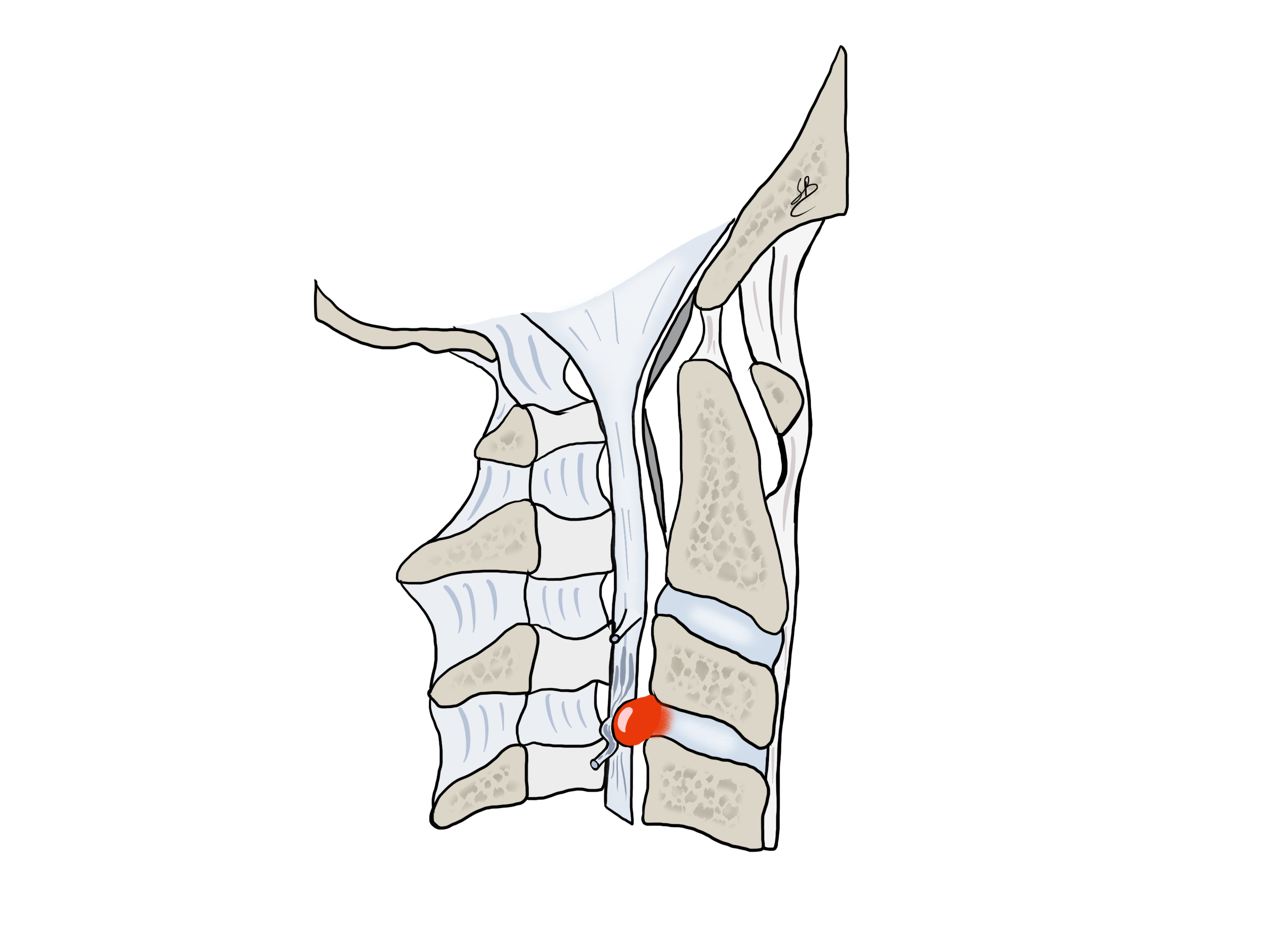
Herniated disk with radicular compression
Most of cases of herniated disk could be treated conservatively with antalgic and anti-inflammatory pills or a peri-nervous infiltration. All these conservative treatments have the goal to reduce the inflammation of the nerve. Such a conservative treatment is contraindicatory in case of motor deficit or cervical medullary syndrome.
If the conservative treatment does not give any benefice, the surgical treatment is indicated. This is a nerve decompression through an anterior cervical approach and after resection of the disk. The diseased disk is replaced by a little titanium cage. The surgery lasts for one hour under general anesthesia. Dr Robert and Dr Bonasia realize this surgery under microscopic view to limit the cutaneous incision (3 cm) and the risk of nervous lesion. Their surgical experience for cervical herniated disk is more than 200 cases.
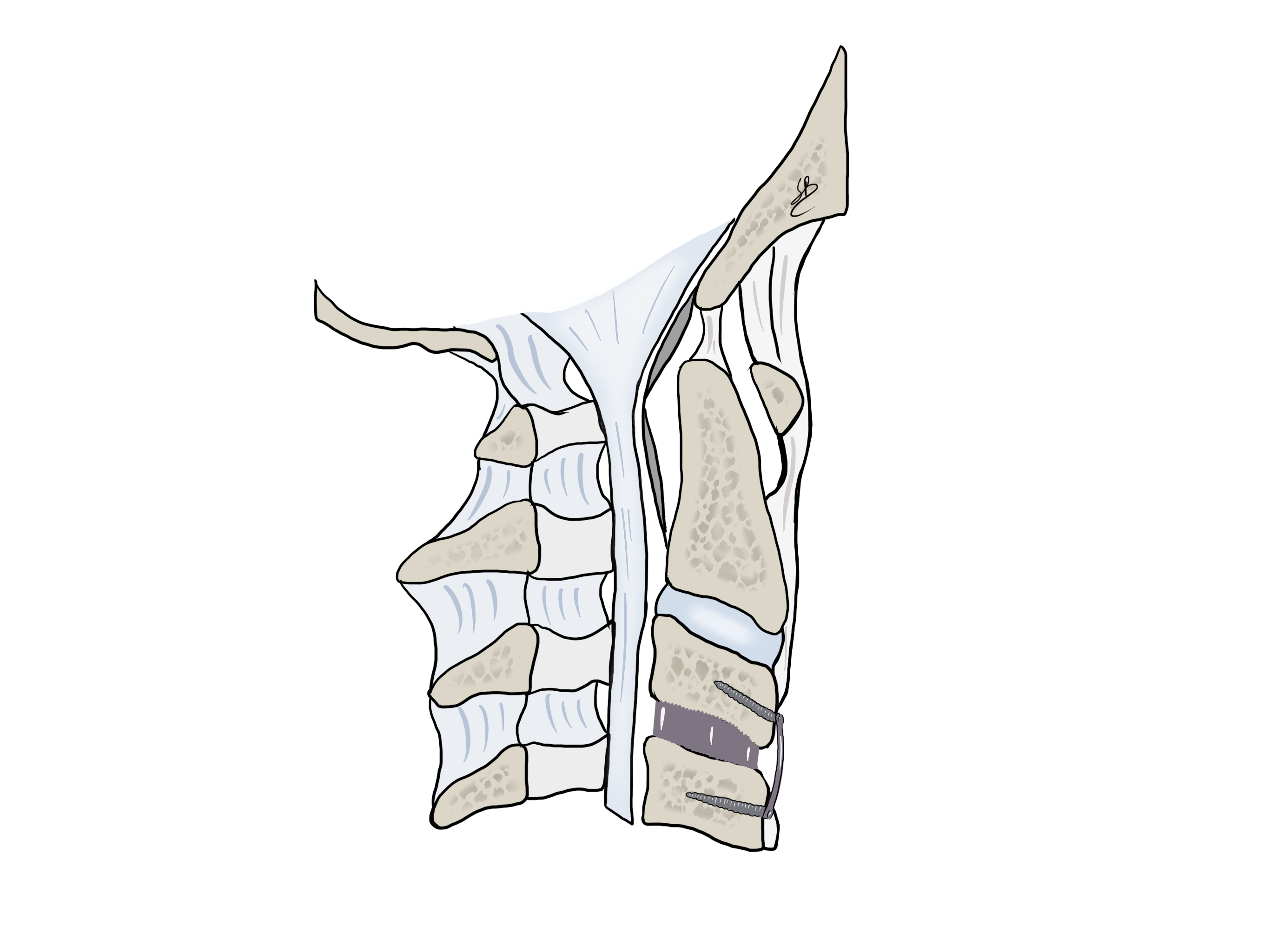
Anterior cervical approach for ACDF
After a surgery of cervical discectomy, the patient follows one cycle of physiotherapy, and the convalescent period is 1 month long. We propose a follow-up of 1 year after such treatment.