Anterior cervical discectomy and fusion (ACDF)
Overview
Anterior cervical discectomy and fusion (ACDF) is a gold-standard surgical technique for treating compressive cervical spine disorders. Through a controlled anterior approach, it allows decompression of nerve roots or the spinal cord while ensuring long-term stabilization of the affected segment. In our center, this procedure is performed using advanced microsurgical standards, with a strong focus on precision, safety, and optimal functional outcomes.
Indications
Surgical indication is based on rigorous clinical and imaging assessment and includes:
- Persistent cervical radiculopathy with arm irradiation
- Motor or sensory neurological deficit
- Cervical myelopathy
- Symptomatic cervical disc herniation
- Disco-osteophytic conflict in degenerative conditions
Surgical technique
The procedure is performed under general anesthesia. A minimally invasive anterior approach is used via a small skin incision in a natural neck crease. Access to the cervical spine is achieved while preserving anatomical structures and without muscle section.
The pathological disc is completely removed, including compressive elements. Precise decompression is performed under microscopic control to free nerve roots and, if necessary, enlarge the spinal canal and remove osteophytes.
Reconstruction involves placement of an interbody implant (cage) to restore disc height, stabilize the segment, and promote bone fusion.
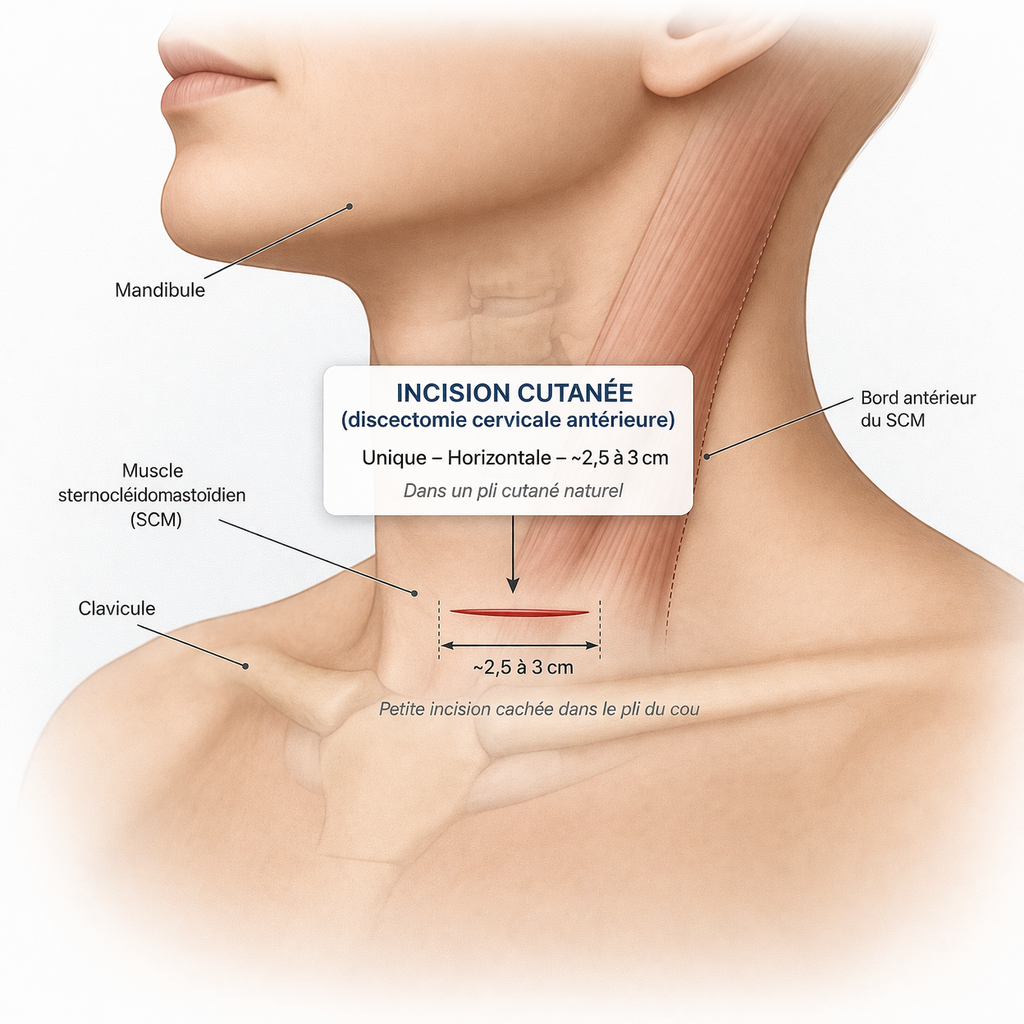
Illustration showing the horizontal incision
Why choose our center?
Our approach combines surgical expertise, advanced technology, and individualized care.
We have performed over 500 cervical procedures, ensuring high technical proficiency and adaptability to each clinical case. All surgeries are performed using minimally invasive microsurgical techniques, maximizing precision and tissue preservation.
Routine use of intraoperative imaging and neuronavigation enhances procedural safety. Each indication is tailored to the patient’s anatomical and functional characteristics.
Our goal is rapid recovery, minimal surgical impact, and durable functional outcomes.
Postoperative course
Recovery is generally straightforward. Early mobilization is encouraged, often on the same day or the day after surgery. Hospital stay is short (48 hours), and return to activities is gradual.
No cervical collar is required. Neck mobility is preserved postoperatively. Bone fusion occurs over several months.
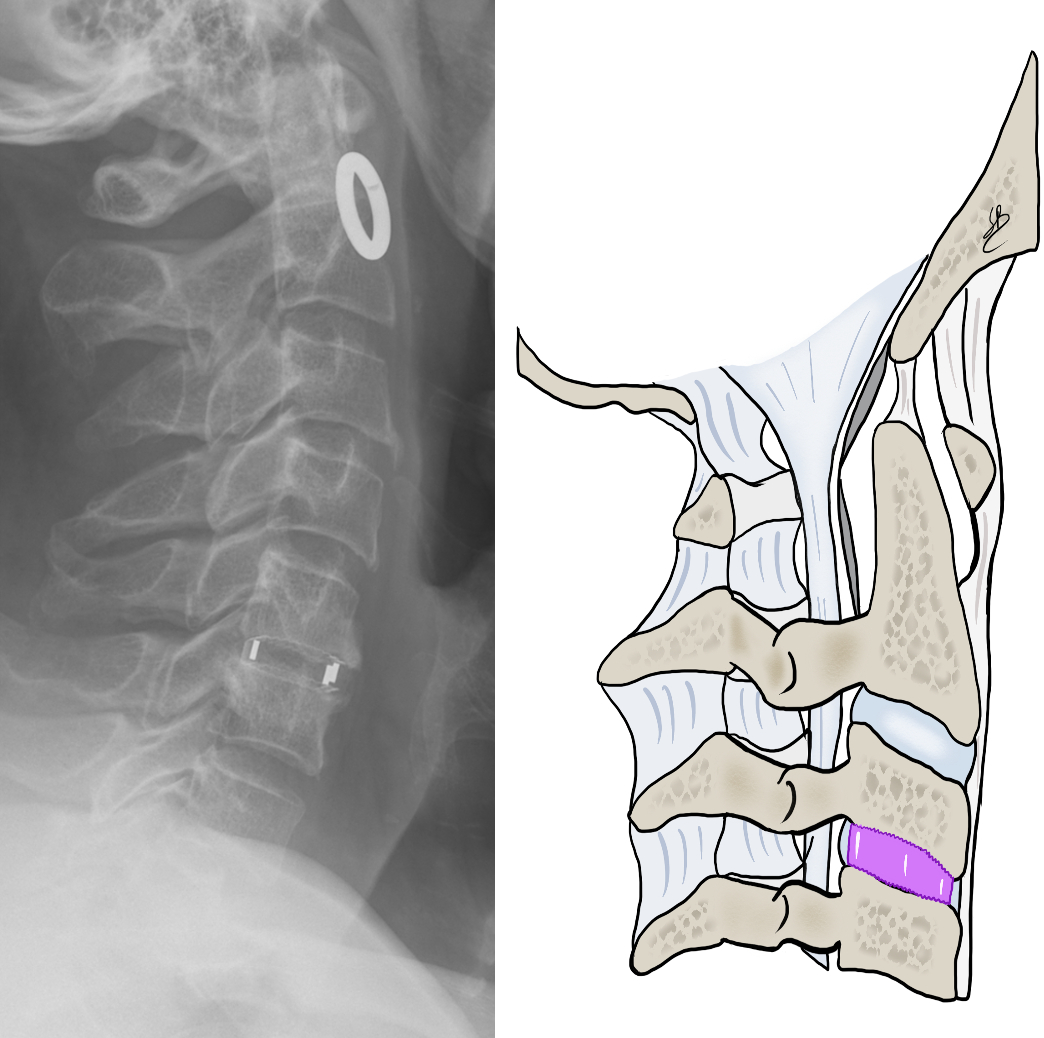
Post-operative lateral cervical x-rays and illustration showing the interbody cage
Risks and complications
As with any surgical procedure, complications are possible but rare (<2%):
- Compressive cervical hematoma
- Infection
- Transient dysphagia
- Recurrent nerve injury (hoarseness, rare)
- Pseudarthrosis
- Neurological complications (exceptional)
Comprehensive preoperative information is systematically provided.
Results
Outcomes are generally very favorable, with rapid relief of radicular pain, progressive neurological recovery, and high patient satisfaction. Segment stability is long-lasting. The procedure does not reduce the risk of adjacent segment degeneration.
Conclusion
ACDF is a reliable, reproducible, and highly effective technique when performed in a specialized setting. Proper indication and surgical precision are key determinants of success.
If you require an evaluation for a cervical problem and wish to have it performed with us, you may contact us via the online form or by email : segretariato@neurochirurgia-robert.ch