
Vertebral Kyphoplasty
Vertebral kyphoplasty is a minimally invasive technique used to treat certain vertebral fractures, most commonly related to osteoporosis, but also in some cases of tumoral lesions. Its goal is to rapidly relieve pain, restore vertebral height, and improve spinal stability.
With experience of more than 500 procedures, our surgeons have developed advanced expertise, ensuring precise, safe, and patient-specific care.
Indications
This procedure is mainly indicated for painful vertebral fractures that do not respond to conservative treatment (analgesics, rest). Patients typically present with acute spinal pain, worsened by movement and significantly limiting daily activities.
The most common indications include:
- Recent osteoporotic vertebral fractures
- Pathological fractures related to metastases or multiple myeloma
- Selected traumatic fractures
Technique
Kyphoplasty is performed under general anesthesia, allowing optimal accuracy with our navigation system.
In our practice, the procedure is carried out using intraoperative 3D imaging navigation (O-Arm), an advanced technology providing real-time three-dimensional guidance. This significantly improves instrument placement accuracy and overall procedural safety.
Under combined fluoroscopy and O-Arm navigation, a needle is inserted percutaneously into the fractured vertebra.
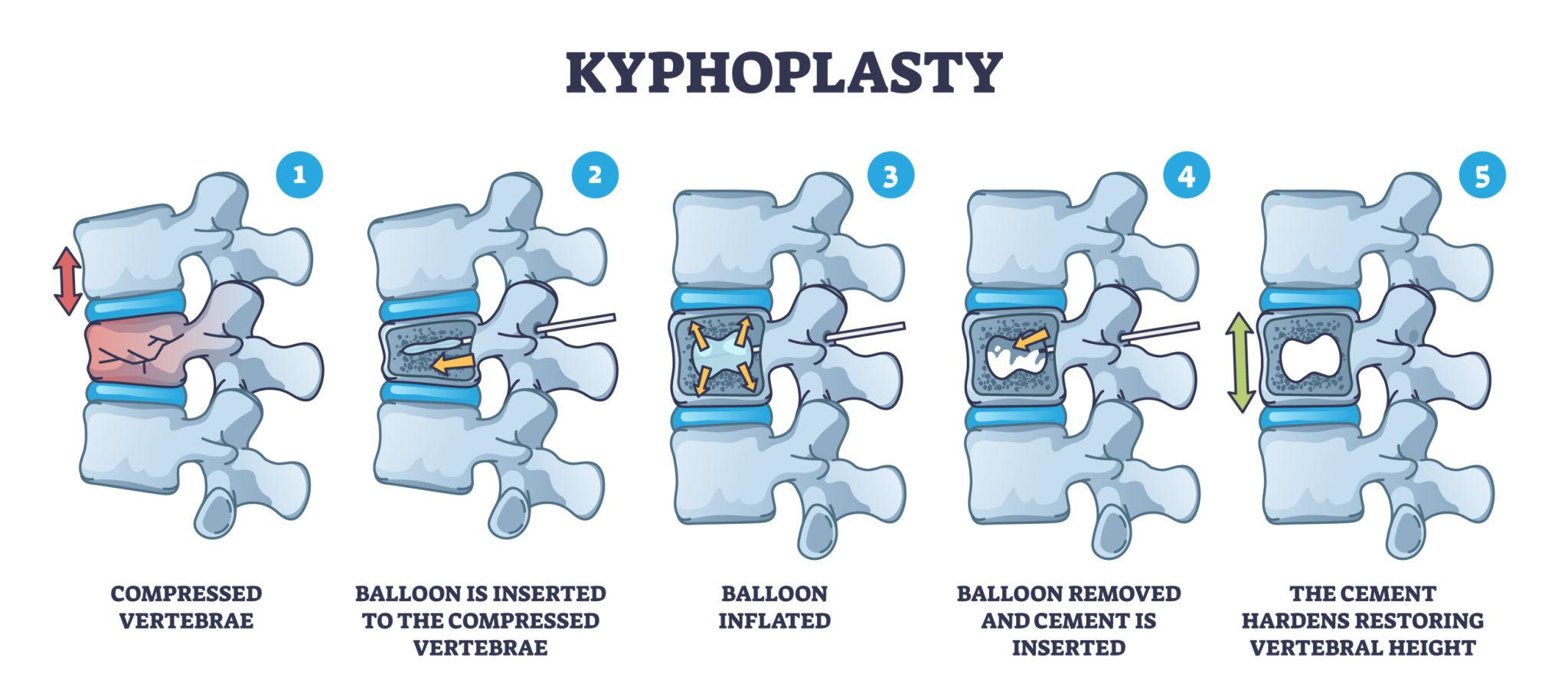
An intravertabral balloon is then inserted and inflated to restore vertebral height and create a cavity. After balloon removal, the cavity is filled with bone cement (PMMA) injected in a controlled manner. The cement rapidly hardens, ensuring immediate fracture stabilization.
Advantages
- Minimally invasive technique with very small skin incision
- Use of 3D navigation (O-Arm) for optimal precision
- Rapid pain relief, often within hours
- Partial restoration of vertebral height
- Reduced risk of progressive kyphosis
- Short hospital stay (typically 48 hours)
Postoperative course
Mobilization is usually allowed within a few hours. Return to daily activities is rapid, with significant improvement in quality of life in the following days.
Appropriate osteoporosis treatment is essential to prevent new vertebral fractures.
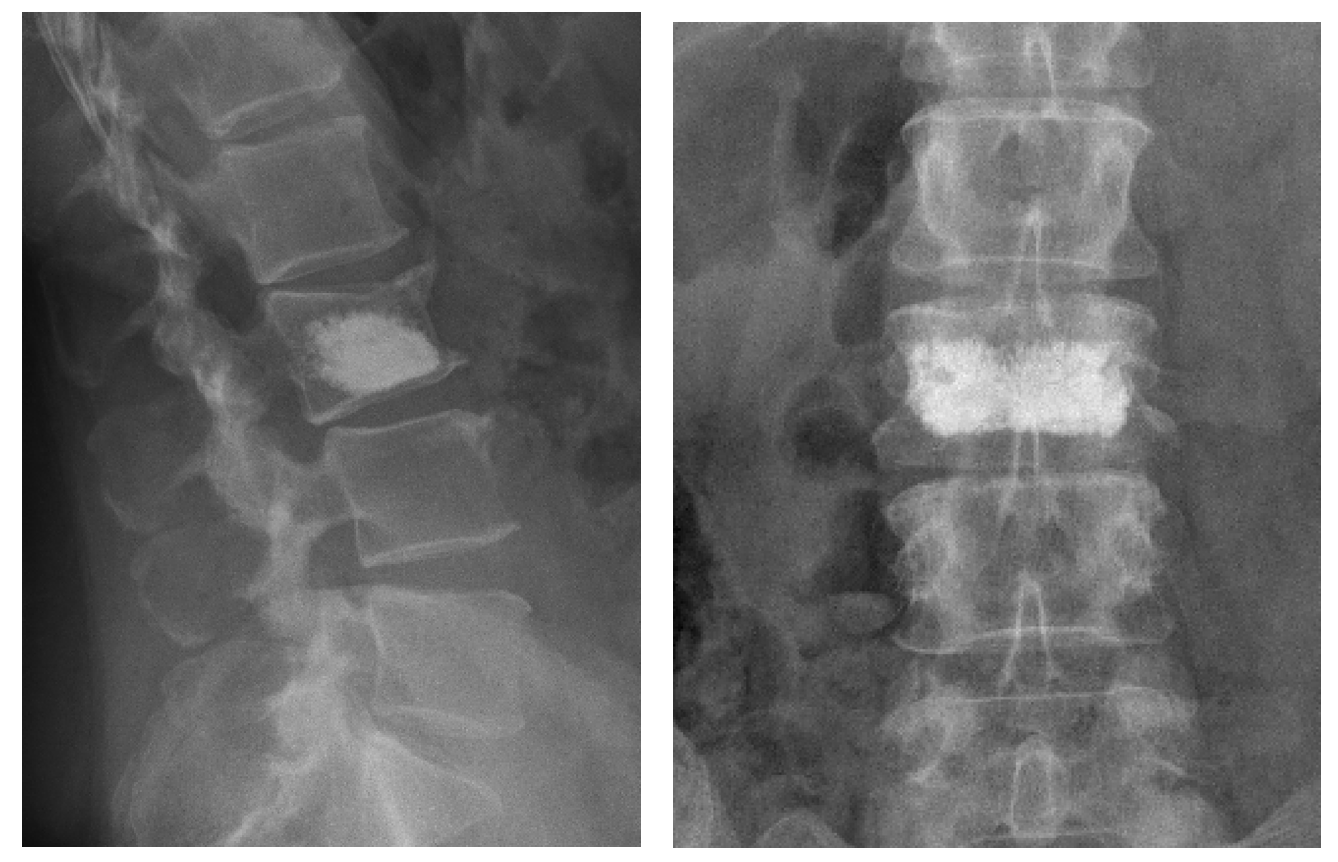
Post operative X-rays after vertebral kyphoplasty
Risks and complications
As with any medical procedure, vertebral kyphoplasty carries some risks, although rare (1–2%):
- Cement leakage (usually without clinical consequences)
- Infection
- Bleeding
- Cement reaction
- Adjacent vertebral fractures
Careful patient selection and the use of advanced technologies such as O-Arm navigation help minimize these risks.
Conclusion
Vertebral kyphoplasty is an effective, safe, and minimally invasive technique for treating painful vertebral fractures. With over 500 procedures performed and the integration of advanced technologies such as O-Arm navigation, we provide modern, highly precise, and patient-oriented care focused on rapid and safe recovery.
If you require an evaluation for a vertebral fracture and wish to be care by us, you may contact us via the online form or by email : segretariato@neurochirurgia-robert.ch